
I regularly speak with advisers who pay over £3,000 for an agency to do their SEO, but they’re overpaying. Why pay for 40 billable hours when the work could be done in 10?
In the UK, there are only a handful of SEO agencies specialising in financial services. They’re full of brilliant people and decades of experience. But their pricing structure is still achore to 2015 production timelines.
AI has changed everything. What used to take 6 hours can now take 45 minutes. And, with the right human in driving seat, it can often be done to a higher standard.
Here’s where the industry sits in early 2026: traditional financial services agencies can’t drop their prices without cannibalising their entire business model.
They’ve got office leases, legacy teams and client expectations baked into contracts signed years ago.
Meanwhile, smaller outfits can integrate AI from day one, charge based on outcomes rather than logged hours and deliver the same quality without the structural baggage.
The result? A pricing gap so wide that boutique financial planning firms who couldn’t afford £4,000 per month for credible digital presence now have access to agency-quality work at a fraction of the cost.
But only if the model is rebuilt from scratch.
Key Takeaways
Traditional agencies charging £4,000-£6,000 monthly retainers can’t adjust pricing without destroying their cost base (built on billable hours)
AI integration is cutting content production time by 70-80%, but human expertise remains critical for strategy, compliance and brand personality
Boutique firms needing 16 pieces of monthly content can now access agency-quality work without the £70,000 marketing team
- The hybrid model delivers compliance-aware, branded content at price points that make consistent digital presence financially viable for smaller practices
The Pressure on Traditional Financial Services SEO Agencies
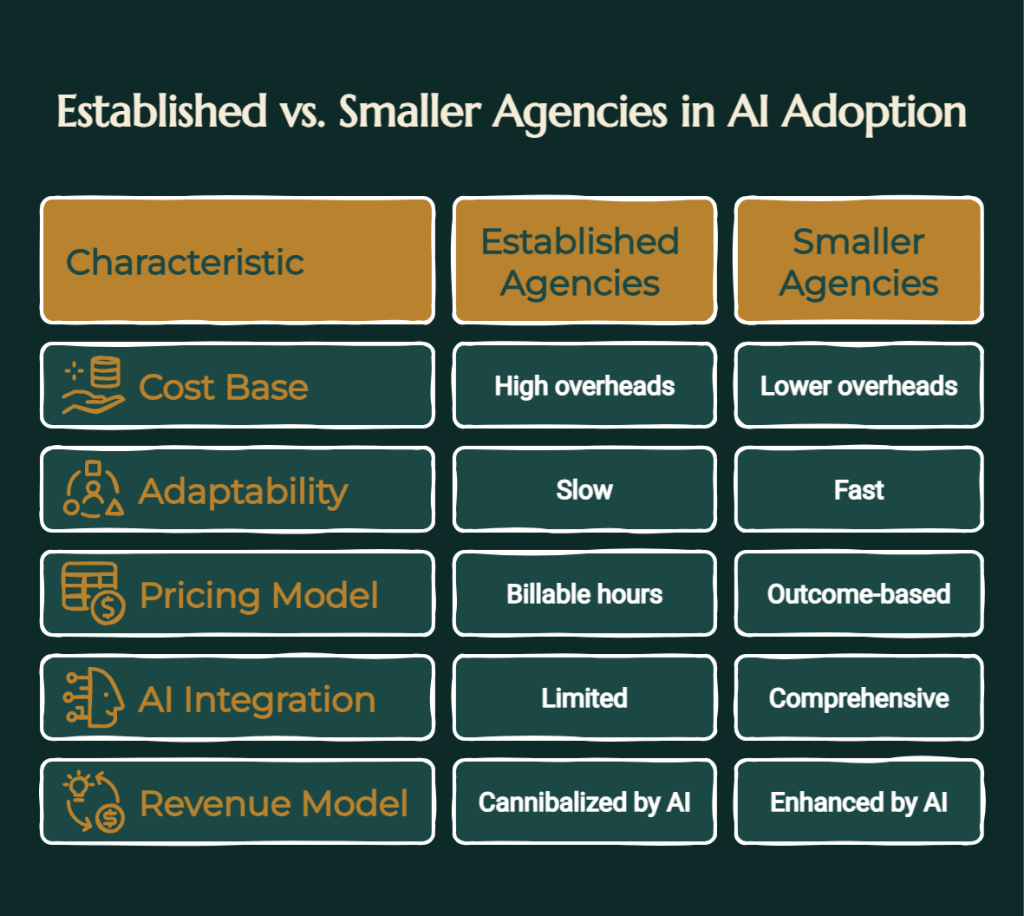
The structural challenge facing established financial services agencies comes down to a fundamental mismatch between their cost base and the rapid efficiency gains from AI adoption reshaping content production economics in 2026.
The Inherent Disadvantage: High Overheads and Slow Adaptability in a Dynamic Market
I know at least two major UK agencies serving financial advisers. Both have dozens of staff, expensive offices and service models built around 2015-era content production timelines.
They’re brilliant at what they do. But there’s a structural problem:
When a newsletter that used to take 6 hours can now be done in 45 minutes, and a blog post drops from 4 hours to 30, those agencies can’t simply cut their pricing by 80%.
Their entire cost base is built on billable hours. They have teams to pay, legacy infrastructure and client expectations baked into retainers signed years ago.
There’s no incentive for them to evolve.
In fact, doing so would cannibalise their own revenue model overnight.
They’ll talk a lot about the importance of integrating “AI search” into your financial adviser marketing. But actually help you implement AI into your own marketing? Good luck.
Meanwhile, smaller outfits like ours can integrate AI and automation from day one, deliver the same quality and charge based on outcomes, not hours logged.
The Efficiency Gap: How Legacy Approaches Limit Innovation
The widening efficiency gap means established agencies continue operating with production models that made sense a decade ago but create an impossible cost structure today. When your competitor can deliver equivalent quality in one-fifth the time, the only sustainable responses are radical restructuring or doubling down on premium positioning.
Most choose neither. They coast on existing client relationships whilst slowly losing ground to leaner operations built for the current market reality.
The Old Way: Manual Processes and the High Cost of Financial Content Production
For the last decade, producing quality content for financial advisers meant one thing: throwing money at the problem.
A single whitepaper? £1,500 and three weeks of back-and-forth. A monthly newsletter? Another £800, plus design fees. Website copy that actually converts? Budget £2,000 minimum.
The maths has been brutal for a long time. To maintain a credible digital presence in 2026, you needed roughly 16 pieces of content per month. At traditional agency rates, that’s probably £4,000 to £6,000 in retainer fees alone.
Most boutique firms simply can’t afford it. So they either went silent online or posted generic content that damaged their brand more than it helped.
This production bottleneck created a two-tier market: larger wealth management firms with proper marketing budgets maintained consistent visibility, whilst smaller practices with superior advice struggled to compete digitally despite having better client outcomes.
Our Unique Approach: Rebuilding the Financial SEO Agency with AI at its Core
Building a financial services marketing operation in 2026 means integrating AI as foundational infrastructure rather than bolting it onto legacy processes.
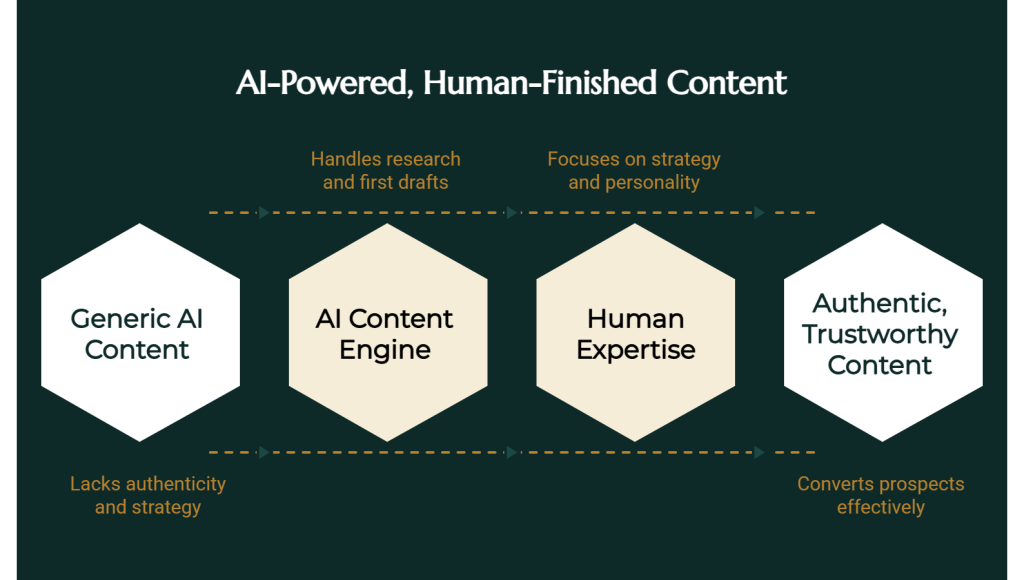
The model works because AI handles volume and speed whilst human expertise focuses exclusively on the strategic and compliance elements that actually differentiate quality work.
The Hybrid Model Explained: Where AI Excels and Human Expertise Makes the Critical Difference
I built Teale Pen and Pixel with AI integrated from day one, not bolted on as an afterthought.
The Content Engine handles 70-80% of the legwork: research, structure, first drafts, newsletter templates and visual concepts. It’s fast, scalable and eliminates the time-sink that used to justify charging £2,000 per deliverable.
But here’s what separates us from the robot farms: I spend 100% of my human time on the final 20-30% that actually moves the needle.
That’s where strategy lives. Where compliance awareness matters. Where your firm’s personality gets injected back into the output so it doesn’t sound like every other financial adviser posting the same ChatGPT drivel.
The AI builds the scaffold. I’m the craftsman who turns it into something you’d proudly send to clients.
It’s agency-quality authority without the agency overhead.
It’s AI-powered, human-finished.
This approach draws on my decade in financial marketing, where I’ve seen what actually converts prospects versus what simply ticks the ‘we posted something’ box.
Generic AI content fails the Trust test immediately. Human-finished work that carries your authentic voice and specific market knowledge passes it every time.
The Impact: Delivering High-Quality, Compliance-Aware Results Without the Overhead
The practical outcome of this rebuilt model is straightforward: financial planning firms get the branded, compliant content they need to maintain credible digital presence without requiring the internal team or agency budget that previously made consistent output financially unviable for practices under £5M turnover.
Real-World Benefits: Crafting Stunning, High-Impact Visuals and Compliant Narratives
This is where the model really proves itself.
Our content engine generates newsletter templates in minutes. You pick the design that fits your brand. Then we produce the body content with our human finish – the part where we make sure it passes both the Common Sense and Compliance tests.
The AI does 70-80% of the legwork. Our specialists handle the final 20-30% that transforms good into excellent. What you get:
- Branded infographics
- Polished narratives
- Visual elements you’d have dreamed of from your old agency-but which simply took too long or cost too much before.
It’s content you’d be proud to send clients. It’s work that reflects the quality of your actual advice.
And it doesn’t require a £70,000 marketing team to deliver it.
The compliance layer matters especially here. Financial services content isn’t just about keyword optimisation and engagement metrics. It’s about producing material that won’t trigger regulatory concerns whilst still being interesting enough that prospects actually read it.
That balance requires someone who understands both financial services marketing and the regulatory environment advisers operate within.
Invitation
Mastering financial services SEO with an AI-powered, human-finished system requires understanding your current capabilities.
AI can draft. Humans make it sound real – and help to keep compliance off your back.
If you’re running a boutique practice and want to see where your current digital presence sits relative to what’s actually working in 2026, take the free Adviser Growth Score quiz.
It’s a 3-minute assessment that benchmarks your marketing effectiveness across the channels that matter for attracting your ideal clients.
Or if you’re ready to explore what adviser-owned automation could deliver for your specific practice, get in touch to arrange a free, no-commitment chat with us.

Frequently Asked Questions
How do you ensure AI-generated content meets FCA compliance standards?
Every piece goes through human review by someone with financial services marketing experience. The AI produces the draft, but we verify accuracy, remove problematic claims and ensure the tone meets regulatory expectations before anything reaches clients. Compliance isn’t an AI task; it’s where human judgement remains non-negotiable.
What’s the actual time saving compared to traditional agency processes?
A newsletter that traditionally took 6 hours now takes 45 minutes total. A blog post drops from 4 hours to roughly 30 minutes. The AI handles research, structure and initial drafting, leaving human time for strategic refinement, brand voice and compliance checks. This 70-80% time reduction is what makes the new pricing economics viable.
Can smaller practices with limited budgets really access agency-quality work now?
Yes, because the cost structure is fundamentally different. Traditional agencies need to recover their overhead through billable hours. We’ve eliminated most of that overhead by automating the time-intensive production work, so the same quality output costs a fraction of legacy agency pricing. Boutique firms needing consistent content can now afford what was previously only accessible to larger wealth managers.
How do you maintain brand personality when using AI for content creation?
The AI generates structure and factual content, but brand personality lives in the final 20-30% where human expertise applies your specific tone, incorporates your market positioning and ensures the output sounds like your firm rather than generic adviser content. That finishing layer is where we spend 100% of human time, and it’s what separates quality work from robot-generated drivel.

Philip Teale is a MCIM marketer with over 10 years’ experience working with financial advisors – helping them gain new revenue and clients using online channels and AI-powered workflows.